Château des Ducs de Bretagne: the complete guide
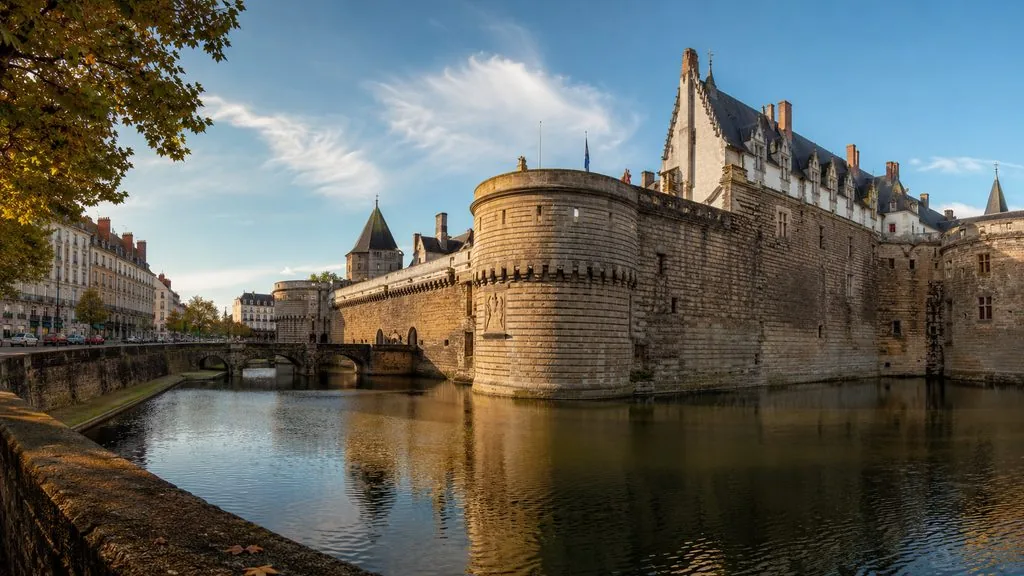
The Château des ducs de Bretagne is the fifteenth-century seat of the last dukes of Brittany, in the centre of Nantes. Its courtyard, moat gardens and 500-metre rampart walk are free every day, 8:30am to 7pm; only the 32-room history museum inside is ticketed, and that museum is closed on Mondays outside July and August.
I grew up three streets from this castle, in Bouffay, and I still cross the moat gardens most mornings. In five seasons of walking visitors around Nantes the same thing happened over and over: people stood outside the gate working out whether the museum was worth a ticket, without realising that the part I would have shown them first costs nothing. So here is the castle, explained, before you decide what to spend.
Black fortress outside, white palace inside
Walk the outside of the walls first. Roughly 500 metres of curtain wall with seven towers, built from granite blocks laid in courses of schist: the Tour du Fer-à-Cheval, the Tour des Jacobins, the Tour des Espagnols, the Tour de la Couronne d’Or and the Vieux Donjon among them. It reads as pure military engineering, and it is.
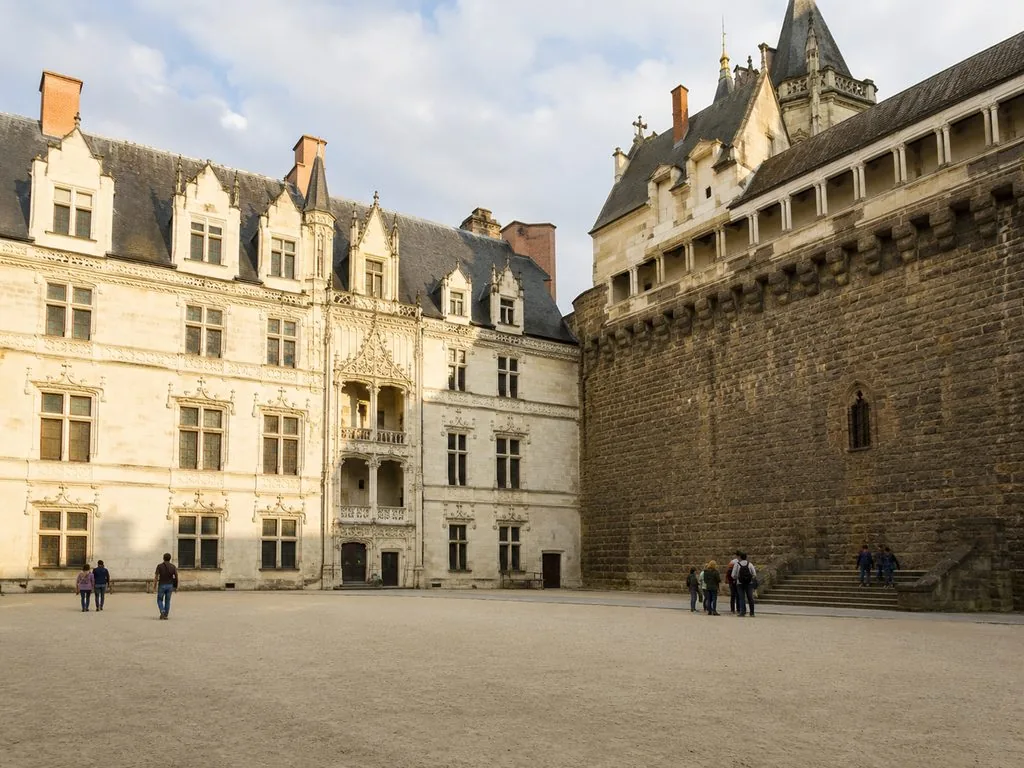
Then cross the drawbridge and the whole thing changes. The fifteenth-century ducal residence in the courtyard is flamboyant Gothic with Renaissance touches, built in white tufa, with sixteenth- and eighteenth-century buildings alongside. The reason for the contrast is political rather than aesthetic. A duke holding off a French king needed granite; the same duke, running a court he wanted taken seriously in Europe, needed a palace. He built both, one inside the other, and it is free to look at.
François II, Anne de Bretagne, and the end of Breton independence
Guy de Thouars, Duke of Brittany, put the first castle here in 1207. The castle you visit was begun in 1466 by Duke François II, the last independent duke, and continued by his daughter Anne de Bretagne, who added the loggias and the spire over the main stair tower. Anne went on to marry two kings of France, and that marriage is where Brittany’s independence ends. It is why people still argue in Nantes about whether the city belongs to Brittany or to the Pays de la Loire it is administered from. The argument starts in this courtyard.
Two later dates matter as much. In April 1598 Henri IV promulgated the Edict of Nantes here. On 17 July 1800 a rotten ceiling in the Tour des Espagnols gave way onto the powder store below; the explosion killed around sixty people and wrecked part of the castle. Classified a monument historique in 1840, the site was restored between 1997 and 2007, three of those years shut. The museum reopened on 9 February 2007.
What the museum actually does with the slave trade
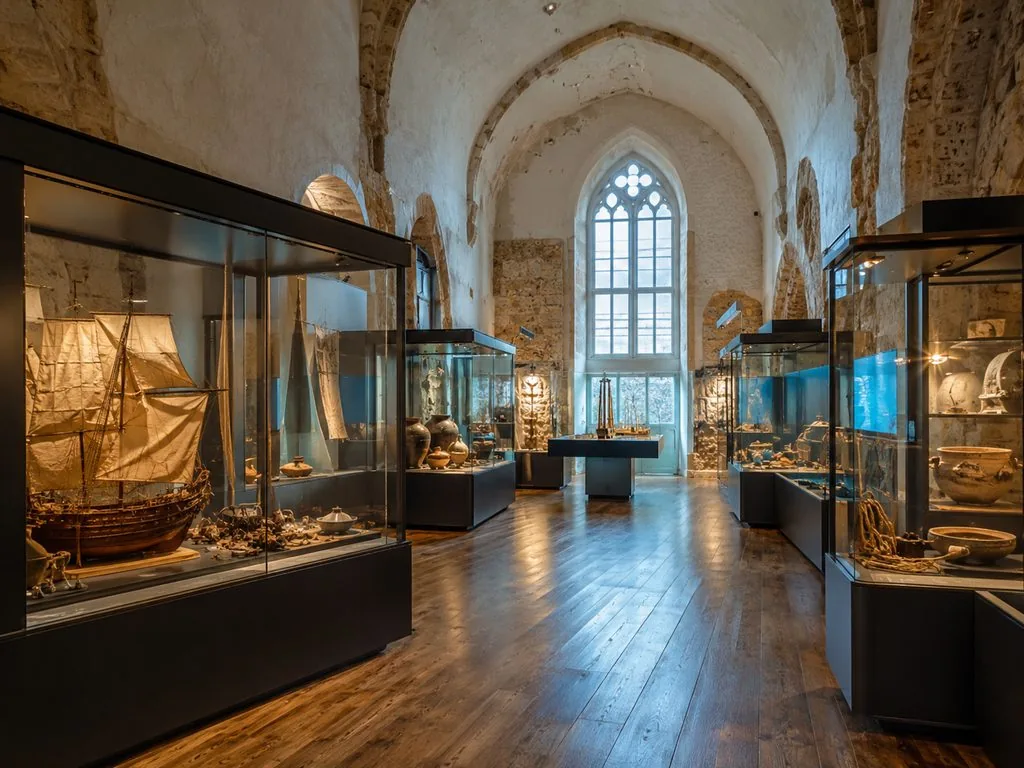
The Musée d’histoire de Nantes occupies 32 rooms and tells the city in 7 sequences, with about 1,150 objects and a great deal of interactive multimedia. Its spine is the Atlantic slave trade. Nantes was France’s largest slave-trading port, and the museum does not soften that, does not park it in a side room, and does not let the merchant fortunes elsewhere in the building be admired without it. If you visit one part of the paid museum with your full attention, make it this one.
Around it the narrative runs from the ducal city through the industrial city, both world wars, and an extension covering 1945 to the present. That last stretch is uneven, and it is where I see people start checking their phones. The temporary exhibition, currently Expression(s) décoloniale(s) #4 from 8 May to 8 November 2026, is included in the same ticket. What the museum is not is a set of furnished medieval rooms. If that is what you came for, skip the ticket.
The free half, and why most people miss it
The courtyard and the rampart walk are open 8:30am to 7pm, seven days a week, and until 8pm from 1 July to 31 August, last entry fifteen minutes before closing. The moat gardens open at 8am. None of that needs a ticket. The rampart walk is the piece I send everyone up: 500 metres along the top of the wall, roofs of the old town on one side and the courtyard below on the other, about half an hour.
The trap is Monday. Outside July and August the museum closes and the grounds do not, so visitors arrive, find the ticket desk dark, decide the castle is shut and leave. I watch it happen from the gardens. The other date worth knowing is the first Sunday of the month, free for everybody except in July and August. The castle closes completely on four days a year: 1 January, 1 May, 1 November and 25 December.
When a guided tour is worth the money
Entry here is cheap or free, so a tour is never bought for access. It is bought for somebody explaining why a duke built a white palace inside a black fortress, which is worth paying for if you want the place to make sense. The lowest-priced of the five is a 2 to 2.5 hour walk from the Porte Saint-Pierre through the château, Bouffay and the Passage Pommeraye, in French only; its 5.0 comes from seven reviews, a sample not a verdict. The higher-priced private walking tour runs in English or French for two hours on a route you choose, with the steadiest record here at 4.8. The mid-range licensed monumental tour is the only one that walks you inside the château, 30 minutes through a separate entrance, and the only one stating wheelchair access; three reviews, so treat its perfect score carefully. The highest-priced is the e-bike tour, 22 km of green line, 1.5 m height minimum. The City Pass is the other mid-range option and the only one including museum admission outright, priced by duration, so longer passes cost more overall and less per day.
My own answer, on the doorstep: walk the free half first, decide about the museum ticket once you have seen the courtyard, and buy a guide for the city rather than for the gate.
Ready to book?
If you want the story rather than just the stones, a guided walk is the thing worth paying for — entry to the courtyard never was. I compare all five options on the tours page, set out the five ways of doing this visit on the ways to visit page, and give my honest verdicts in the tour reviews. Live availability for the Nantes City Pass, which includes museum admission, is below.
Frequently asked questions
What is the Castle of the Dukes of Brittany?
It is the Château des ducs de Bretagne in Nantes, begun in 1466 by Duke François II and continued by his daughter Anne de Bretagne, and now home to the Musée d’histoire de Nantes. More on who built it.
Is the Château des ducs de Bretagne free?
The courtyard, the moat gardens and the 500-metre rampart walk are free every day. Only the museum inside is ticketed, with a reduced rate for 18 to 25s and teachers and free entry for under-18s. What you get for nothing.
How long do you need at the castle?
About 30 minutes for the ramparts and courtyard, and another 90 minutes to two hours if you go into the museum. Plan the timing.